
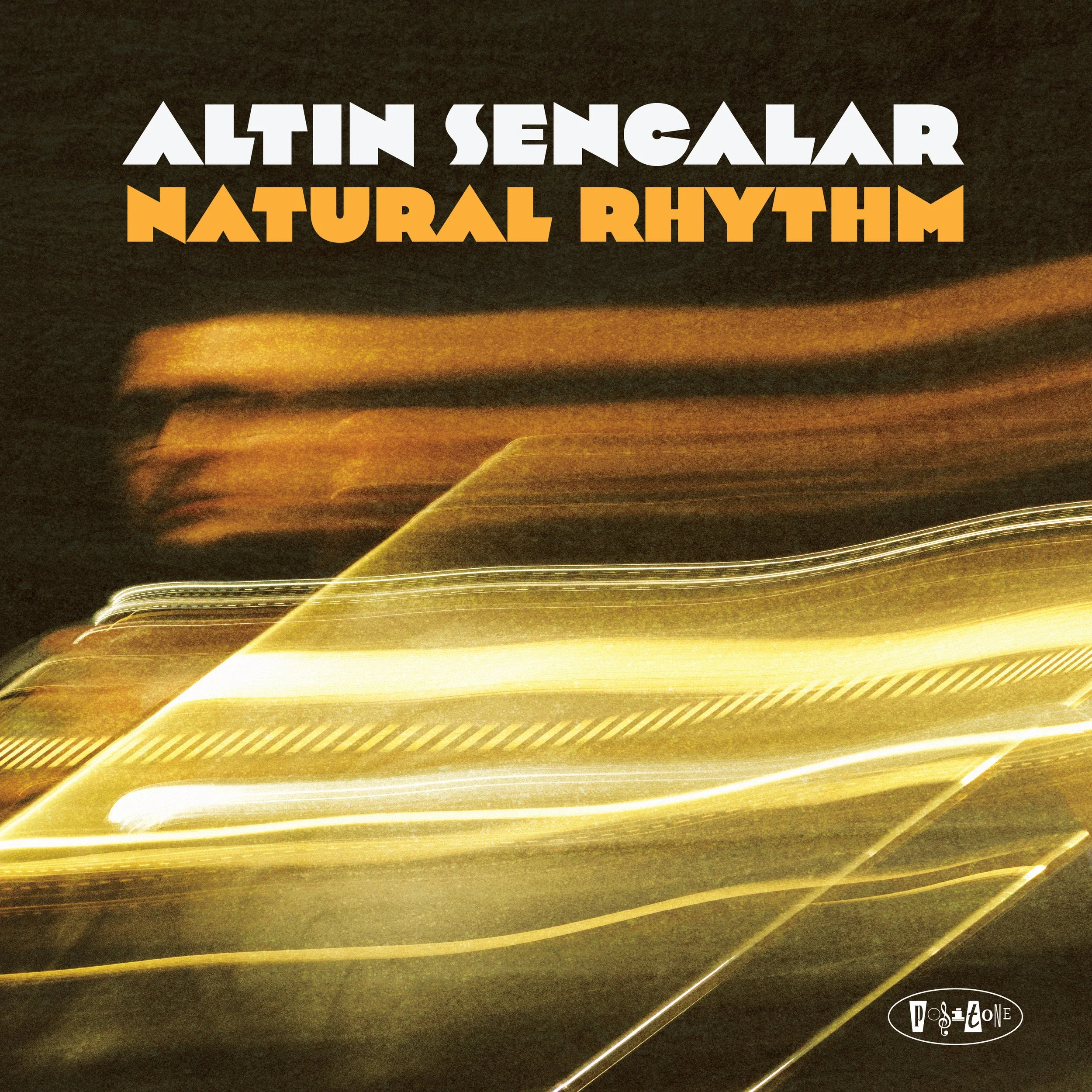
Linear Notes for Natural Rhythm
Natural Rhythm is a reflection of trombonist and composer Altin Sencalar’s profound roots. “My mother is Mexican, and my father's Turkish, but I grew up with the Hispanic side of my family. Basically in every part of my music, [the] Latin diaspora radiates.”
Growing up in Temple, Texas, when his grandfather picked him up from school, the soundtrack was Tejano music. “He liked mariachi music live, but on the radio, it was more Norteño and Banda music.” Those radio waves seeped into Altin’s inspirations.
At about 12 years old, he encountered the Brian Lynch and Eddie Palmieri album, Simpático, further inspiring him. He realized then that “a trombonist can play Latin music and be a featured artist. It's not just a supporting role.” Interestingly enough, he added, “in primarily Mexicano music, they have valve trombones, and that's really for trumpet players to play along, because it's a valve instrument. It's just in a lower pitch, because it's the trombone.” Natural Rhythm lightly traces the footsteps of Simpático, yet forges a fresh path. The album includes a smattering of off-the-beaten-path interpretations situated alongside keen originals, such as “Baila de Plena”, “Settling”, “Descarga de Dia” and “Run Away”, all capturing an enticing sense of energy.
Regarding Coltrane’s “Resolution”, he explained, “[By] putting clave with “Resolution” as well as by putting it in seven, which is an odd meter, I wanted to make sure that I honored the intensity of this track.” His interpretation of JJ Johnson’s “Lament” is equally inspired. “That's normally a ballad. And honestly, I've just always wanted to hear it as a two-three salsa.”
“In Walked Horace”, another JJ Johnson composition, is reimagined as a calypso. This was a natural choice according to Altin. “JJ's music elicits clave. A lot of people just consider him a very straight ahead, swing oriented cat. But there's more to his writing that elicits a deeper understanding of culture.”
For his interpretation of Wayne Shorter’s “One by One”, Altin noted, “That tune screams to me guajira.” Sharel Cassity, Alex Norris and Sencalar all play in the Dizzy Gillespie All-Star Alumni Big Band. “So we know how to play in a section,” he illuminated. “I wrote it as a mini big band portion. I feel like it's like Art Blakey going clave.”
Two originals hold particular meaning to Sencalar: “Reflections” and “New Life.” ““New Life” is a bolero, and it's for my daughter, Lucia. “I'm expecting her to be gentle yet sophisticated with emotional depth, similar to the track,” he shared.
““Reflections” is a bossa for my son, John, who is named after my grandfather, John Fernando Garcia. I'm reflecting on expecting my son to have many similarities to my grandfather, who was like my father figure.”
Speaking of distinctly intergenerational connections, Altin says this album “represents a lot of camaraderie across different generations that expresses all of these players' depths within Latin music.” Gary Kerkezou, a young woman on the New York scene who’s originally from Greece, plays drums while Alex Acuña, the original percussionist in Weather Report, is featured in the band as well. He added that he felt honored “to work with a friend, as well as somebody who is absolutely considered a legend in this art form. And these parallels just run across the entire album.”
Trumpeter Alex Norris has played in various jazz configurations in New York City, while bassist Boris Kozlov was in Eddie Palmieri's trio. Meanwhile, pianist Art Hirahara has also been a fixture in the contemporary New York scene, while trombonist and saxophonist Mike Dease and saxophonist Sharel Cassity have each served as important mentors to Altin.
The last song of the album is a sparkling blues number called “Settling”. “And that's totally by design. I love Latin music, I love everything it represents, but I'm also a huge advocate for jazz music and Black American experience within this music.” Altin concluded, “And so for me to still play the blues and swing with intentionality, authenticity, [while also] representing myself… Yeah, that is natural rhythm.”
“In the studio, I didn't have to think. I just played… which is a first. On this record, I was dancing in the studio, every single song. And the more I sat with it, I was like, ‘Yeah, this is absolutely my natural rhythm, this entire soundtrack.’"